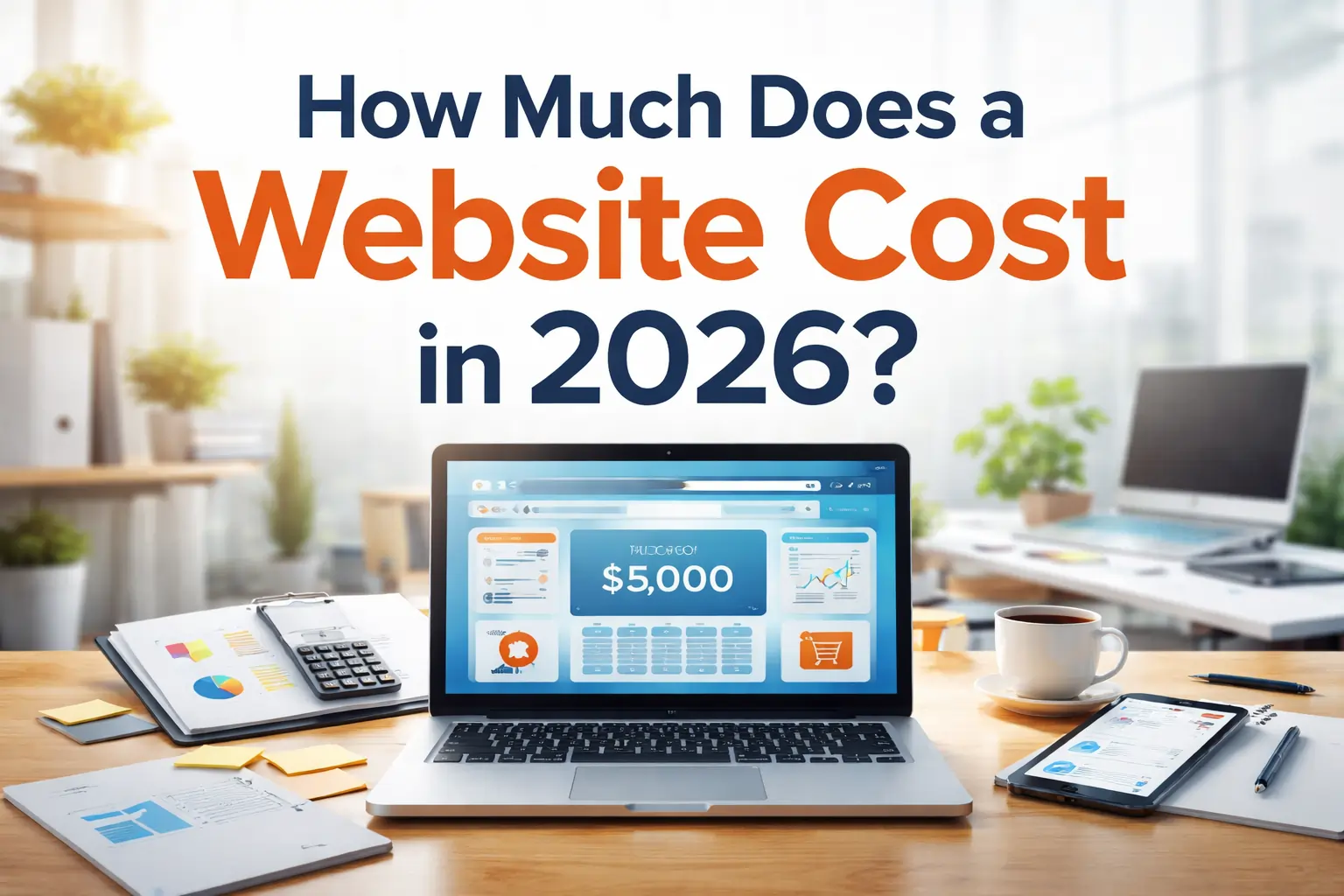
Most startups should expect to spend anywhere from $750 to $3,000 on a website in 2026. The right budget depends on what the business needs today and where it wants to go next. A solo founder or local service business may only need a simple one-page website with clear messaging and contact details. A growing business may need more pages, stronger branding, SEO setup, better copy, and a website built to support future growth.
Smaller businesses can start lean if they need to launch quickly and keep costs low. But businesses planning to grow, run ads, improve Google rankings, or build trust with customers should expect to invest more from the start.
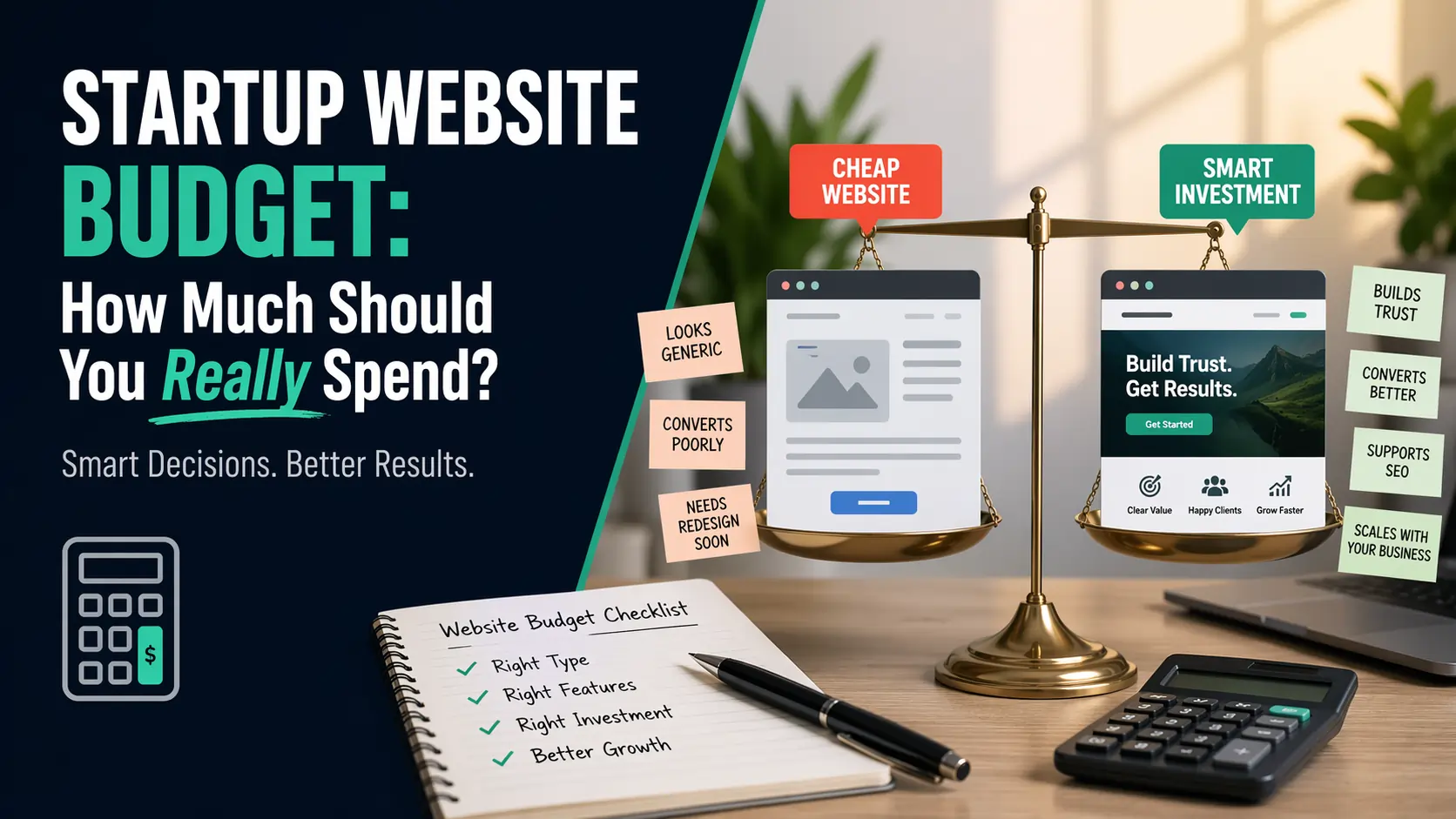
The cheapest website is not always the smartest choice. A low-cost website can look generic, feel outdated, and often needs to be rebuilt later.
Why Website Budget Matters
For many startups, a website is the first thing people see before they call, book, or buy. A potential customer may find your business through Google, social media, or a referral, but the website is often where they decide if they trust you.
If the website looks outdated, confusing, slow, or unfinished, people often assume the business itself is the same. Weak design, unclear messaging, poor mobile experience, and hard-to-find information can make visitors leave within seconds.
A lot of startups underestimate how much their website affects trust. They focus on logos, social media, or ads first, then treat the website like a small task that can be done as cheaply as possible. But even the best ad campaign or referral will struggle if the website does not make people feel confident.
People expect a business website to answer simple questions fast. What does the business do? How much does it cost? Why should someone trust it? How can they get in touch? If visitors cannot find those answers quickly, they often leave and look somewhere else.
A good website does more than look professional. It helps people understand what you do, why it matters, and what step to take next.
Typical Website Budget by Business Stage
Early-Stage Startup
An early-stage startup usually spends between $750 and $1,200 for a basic website. This is often enough for a one-page or small multi-page site with a homepage, about section, services, and contact page.
At this stage, the goal is usually to launch fast, look professional, and give people enough information to trust the business. Most startups in this range do not need advanced features, custom integrations, or large amounts of content yet.
Solo Founder or Service Business
A solo founder, consultant, coach, local business, or service provider will often spend between $1,000 and $1,800. This budget usually covers a better design, stronger copy, a few extra pages, mobile-friendly layout, contact forms, and basic SEO setup.
This is often the right range for businesses that want to look more established and attract leads from Google, referrals, or paid ads.
Growing Business
A growing business usually spends between $1,800 and $3,000. At this stage, the website often needs more pages, better branding, stronger messaging, SEO-focused structure, blog setup, and better conversion paths.
Businesses in this stage are usually focused on growth. They may be running ads, building authority, adding new services, or trying to rank higher on Google. A stronger website becomes more important because it supports sales, trust, and long-term growth.
Ecommerce or Larger Business
An ecommerce business or larger company will often spend $2,500 to $5,000 or more depending on the number of products, payment setup, shipping rules, custom features, and integrations needed.
A simple online store with a few products may stay near the lower end of that range. A larger ecommerce website with many product pages, filters, customer accounts, email setup, and marketing tools can cost much more.
DIY vs Freelancer vs Agency vs Boutique Studio
DIY Website Builders
DIY website builders like WordPress, Wix, or Squarespace are usually the cheapest option. Most businesses spend between $100 and $500 per year on templates, hosting, plugins, and tools.
The main advantage is cost. You can launch quickly and keep spending low. This can work for businesses with very small budgets or founders who are comfortable building the site themselves.
The downside is time, quality, and flexibility. DIY websites often look generic, take longer to build than expected, and can be difficult to improve later. Many business owners also struggle with writing good copy, structuring pages, and making the site look professional.
Freelancers
Freelancers usually charge between $500 and $2,000 depending on experience, number of pages, and scope.
A freelancer can be a good option if you want a custom website without paying agency prices. Many freelancers can handle design, development, and basic SEO setup.
The risk is inconsistency. Some freelancers are excellent. Others may disappear, miss deadlines, or build websites that are hard to update later. A low-cost freelancer may also rely heavily on templates and may not provide much strategy, copywriting, or support.
Agencies
Agencies usually charge between $3,000 and $10,000 or more. Large agencies may charge much higher prices for custom work, strategy, branding, SEO, and ongoing support.
The advantage is that agencies often have larger teams with designers, developers, copywriters, and marketers. They can handle bigger projects and more complex websites.
The downside is cost and process. Many startups end up paying for layers of meetings, account managers, and services they do not really need.
You can also see average agency pricing benchmarks on Clutch.
Boutique Studios
Boutique studios usually charge between $750 and $3,000 for startup and small business websites.
This option often gives you a balance between cost, quality, and personal support. A boutique studio is usually smaller than an agency but more structured than hiring one freelancer.
For startups and small businesses, this can often be the best fit. You get better communication, stronger strategy, and a website that feels more custom without paying agency-level prices.
Cheap Website vs Smart Investment
A cheap website may save money at the start, but it often creates bigger problems later.
Low-cost websites usually rely on basic templates, weak copy, stock images, and generic layouts. They may look acceptable at first, but they often fail to make the business stand out. Many cheap websites also load slowly, perform poorly on mobile, and make it hard for visitors to understand what the business actually does.
And if a website does not build trust, it does not convert. People leave. Leads drop. Sales suffer.
Cheap websites also tend to need redesigns much sooner. A business may spend $500 today, then spend another $2,000 or more a year later because the original website no longer fits the brand, does not rank on Google, or cannot support new pages and features.
A better website is not just about design. It helps people trust the business faster. It explains services clearly. It guides visitors toward taking action. It works better on Google, performs better on mobile, and gives the business room to grow over time.
This is why the cheapest option is often the most expensive one in the long run. A smart website investment should last for years, not months.
What Is Worth Paying More For?
Not every part of a website needs a bigger budget. But some things are worth paying more for because they directly affect trust, leads, and long-term growth.
Better copy is one of them. A website with clear, simple messaging usually performs much better than a website filled with vague headlines and generic text. People should understand what you do, why it matters, and what they should do next within a few seconds.
Better design is also worth paying for. Clean layouts, strong visuals, and consistent branding make a business feel more trustworthy. A website does not need to be flashy, but it should feel professional.
SEO matters too. A good website should be built so people can actually find it on Google. That includes page structure, keywords, headings, image optimization, and fast loading times.
Mobile performance is another area that matters. Most people will visit a website from their phone first. If the site is slow, broken, or hard to use on mobile, people will leave.
It is also worth paying more for a conversion-focused structure, stronger branding, and a better user experience. A website should guide people naturally from landing on the page to taking action, whether that means filling out a form, booking a call, or making a purchase.
What Type of Website Should a Startup Choose?
One-Page Website
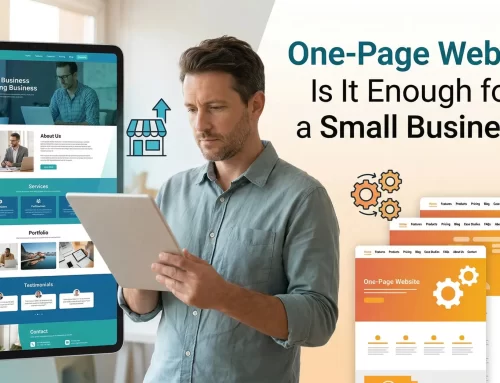
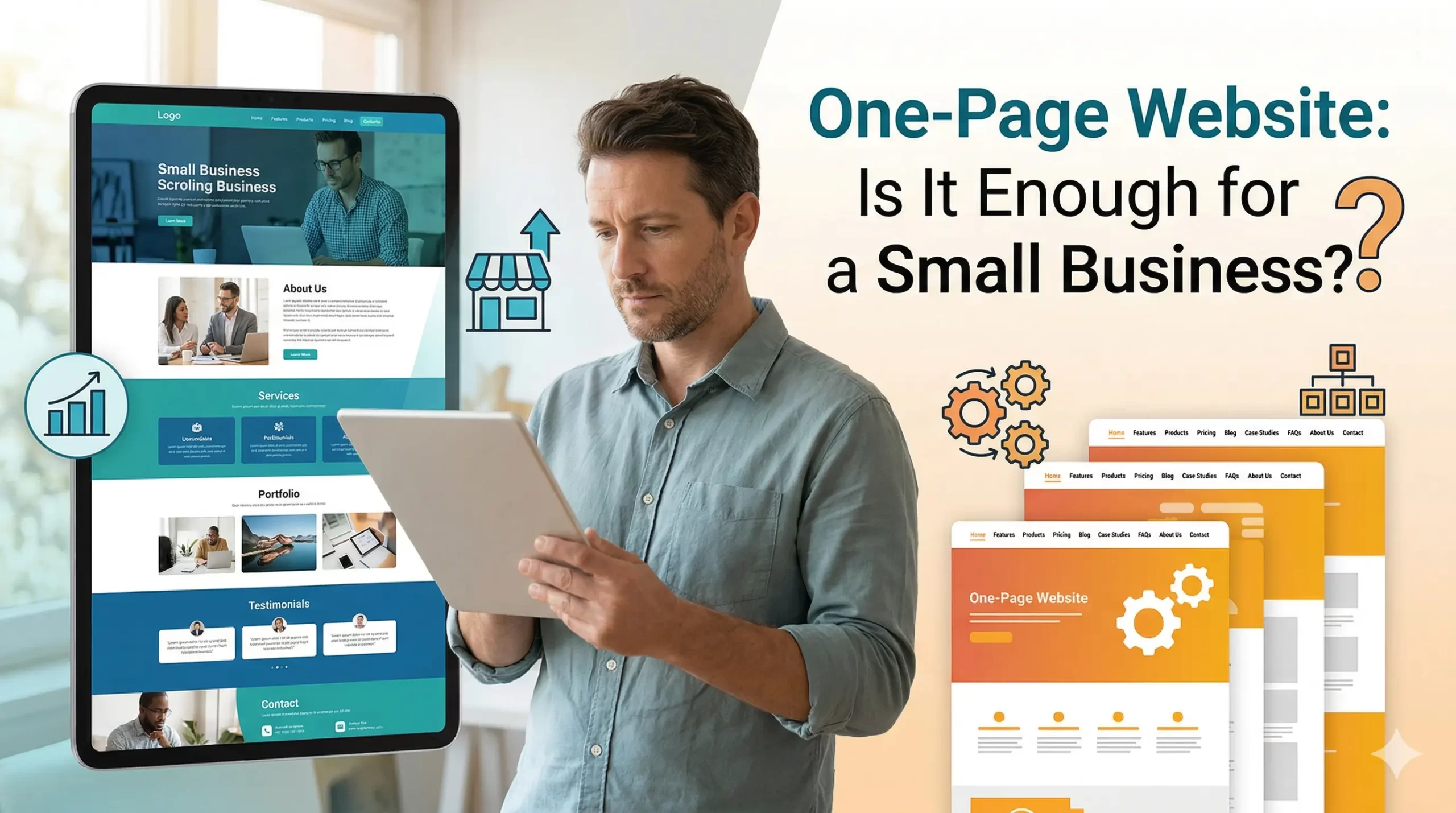
A one-page website is often the best option for very early-stage startups, solo founders, and local service businesses. It keeps everything on one page, including the business overview, services, proof, and contact details.
This type of website works well if you need to launch quickly, keep costs low, and explain a simple offer. It is often enough for businesses that rely on referrals, local clients, or one main service. You can also link naturally to Is a One-Page Website Enough for a Small Business? for readers who want more detail.
Small Business Website
A small business website usually has 4 to 7 pages, such as Home, About, Services, Blog, and Contact. This is a better fit for businesses with multiple services, more detailed information, or plans to grow through SEO and content.
This type of website gives you more room to build trust, answer questions, and create separate pages for different services or locations.
Ecommerce Website
An ecommerce website is the right choice if you plan to sell products online. These websites need product pages, payment setup, shipping options, customer emails, and other features that a normal business website may not need.
Platforms like Shopify can work well for smaller online stores, while larger ecommerce brands may need a more custom setup.
Brand-First Website
A brand-first website focuses more on design, storytelling, visuals, and emotional connection. This type of website often makes sense for creative businesses, luxury brands, agencies, fashion brands, and businesses where perception matters a lot.
These websites usually invest more in custom design, photography, copywriting, and brand identity because the goal is not just to inform people. The goal is to make people remember the business.
Common Budget Mistakes Startups Make
One of the biggest mistakes startups make is spending too little. A very cheap website may seem like a smart way to save money, but it often leads to poor design, weak messaging, and a site that needs to be rebuilt within a year.
Another common mistake is spending too much too early. Some startups pay for advanced features, large ecommerce systems, custom animations, or expensive branding work before they actually need it. A business should build for its current stage, not for a future version of itself that may still be years away.
Many startups also ignore content. They focus on design and forget that words matter just as much. If the copy is weak, confusing, or too generic, the website will struggle even if it looks good.
Choosing the cheapest option is another mistake. Low-cost freelancers, cheap templates, and rushed websites often create more work later. The business may end up paying twice – once for the cheap version and again for the redesign.
And some startups pay for features they do not need. Things like membership systems, custom calculators, advanced booking tools, or large blog sections can add cost quickly. If those features are not important today, it is often better to add them later.
Final Takeaway
A startup website should not be judged by how cheap it is. It should be judged by how well it helps the business build trust, attract customers, and grow.
The right website budget is not about spending the most money possible. It is about spending enough to create something that looks professional, explains the business clearly, and gives people confidence to take action.
For some startups, that may mean starting with a simple one-page website. For others, it may mean investing more in design, branding, SEO, or ecommerce features from the beginning.
What matters most is building a website that fits the current stage of the business while leaving room to grow later. A cheaper website may save money today, but if it needs to be rebuilt in six months, it often becomes the more expensive option in the long run.