
A one-page website can work for some small businesses, but not for every business.
If you are a consultant, freelancer, local service business, or startup with one main offer, a one-page website may be enough. It gives visitors the key information in one place – who you are, what you do, why they should trust you, and how to contact you.
A one-page website is also faster to build, easier to manage, and usually costs less than a larger website.
But it is not always the best long-term option. If your business has multiple services, wants stronger SEO, plans to target different locations, or expects to grow quickly, one page can become limiting.
The right choice depends on your business type, goals, services, and growth plans. For many small businesses, a one-page website is a smart place to start.
What Is a One-Page Website?
A one-page website is exactly what it sounds like. Instead of having separate pages for About, Services, Testimonials, and Contact, everything sits on one page.
Visitors land on the homepage and scroll down to learn about your business. They do not need to jump between different pages or menus.
Most one-page websites include sections like:
- Hero section with your main message
- About section explaining who you are
- Services section showing what you offer
- Testimonials or reviews for trust
- Contact section with a form, phone number, or email
Some businesses also add pricing, FAQs, portfolios, before-and-after photos, maps, or social proof.
The main goal of a one-page website is simplicity. It helps visitors quickly understand what your business does and what they should do next.
This type of website works best when your business has one clear offer and one main audience. For example, a photographer, consultant, local service business, coach, or startup may not need five or ten pages in the beginning.
A one-page website can also make decisions easier for visitors. Instead of sending people through multiple pages, you guide them through one story from top to bottom. That often leads to more calls, bookings, or contact form submissions.
Most one-page websites also use a simple menu at the top that jumps visitors to different sections of the page. This makes the site easy to use, especially on mobile where people prefer quick scrolling over clicking through many pages.
When a One-Page Website Works Well
A one-page website works best when your business is simple, focused, and does not need a lot of content.
It can be a good fit for:
- Solo founders
- Consultants
- Freelancers
- Coaches
- Local service businesses
- Restaurants or cafes
- New startups
- Businesses with one or two main services
For example, if you are a photographer, plumber, interior designer, lawyer, fitness coach, or marketing consultant, most visitors only want a few things. They want to know who you are, what you offer, why they should trust you, and how to contact you.
A one-page website makes that process easier.
Instead of sending visitors through five or six pages, you guide them through one simple journey. They see your main message first, then your services, reviews, FAQs, and contact details.
That simplicity can help conversion because there are fewer distractions. Visitors do not have to search through menus or decide where to click next. Everything is right in front of them. If you want to learn more about why simple websites often perform better, you can also read our guide on what makes a website high-converting.
A one-page website also works well for new businesses because it helps you launch faster. Many founders do not need a large website on day one. They just need a clean online presence that explains the business and brings in leads.
For example, a local electrician with one main service area may do well with a one-page website. But a large company with different services, multiple locations, and separate audiences will probably need more pages.
If your goal is to get more calls, form submissions, bookings, or inquiries, a one-page website can often do the job without making the experience complicated for visitors.
When a One-Page Website Is Not Enough
A one-page website is not always enough, especially if your business is more complex or plans to grow over time.
If you offer many different services, one page can become crowded very quickly. Visitors may struggle to find what they need, and you may not have enough space to explain each service properly.
For example, a marketing agency that offers web design, branding, SEO, paid ads, email marketing, and social media management will usually need separate pages for each service.
A one-page website is also not ideal for ecommerce businesses. If you sell products, you will need product pages, category pages, checkout pages, shipping information, return policies, and customer support pages.
SEO can also become harder with a one-page website. If you want to rank for different services, multiple keywords, or several locations, one page gives you limited room to target those searches.
For example, if you are a roofing company serving five different cities, you may need separate location pages for each city. If you are a law firm with different practice areas, you may need separate pages for family law, personal injury, immigration, or business law.
Separate pages also help Google better understand what your business offers. A dedicated service page gives you more room to target keywords, answer questions, and rank in search results.
A one-page website can also become restrictive as your business grows. You may want to add blogs, case studies, FAQs, landing pages, hiring pages, or more services in the future.
That is why many businesses start with one page and later expand into a larger website once they need more space, stronger SEO, and room for growth.
Benefits of a One-Page Website
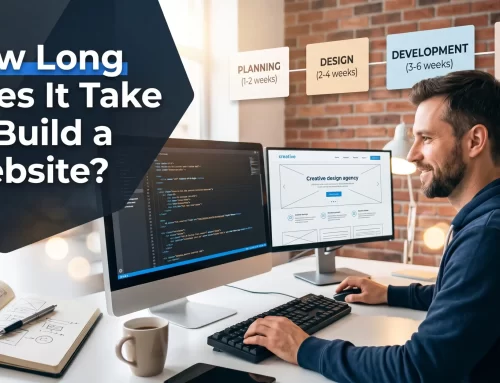
One of the biggest benefits of a one-page website is speed. Because there is only one main page to design and build, you can usually launch much faster than with a larger website.
That matters for small businesses that want to start getting leads quickly. If you are opening a new business, launching a service, or testing an idea, you may not want to wait weeks or months for a large website.
A one-page website is also more affordable. There are fewer pages to design, write, and develop, which means lower costs for most small businesses.
It is also easier to manage after launch. If you need to update a phone number, change a service, add a review, or edit your pricing, you only have one page to update instead of ten.
Navigation is another big advantage. Visitors do not need to click through different pages to find what they need. They can simply scroll down and see your story, services, reviews, FAQs, and contact information in one place.
This also works well on mobile. Most people already scroll naturally on their phones, so a one-page website often feels easier and faster to use on smaller screens.
A one-page website can also create a clearer message. Because space is limited, you are forced to focus on what matters most. That often leads to a stronger headline, simpler content, and one clear call to action.
For a small business with one main offer, that simplicity can lead to more calls, leads, bookings, and contact form submissions.
Research from HubSpot shows that simple websites with clear calls to action often perform better for small businesses.
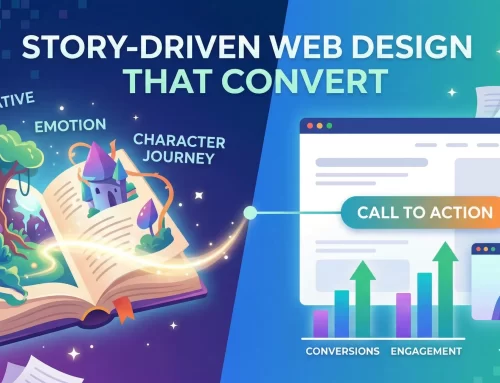
One-page websites also work well because they guide visitors through one clear story from top to bottom. If you want to understand why that matters, read our guide on story-driven web design.
How Much Does a One-Page Website Cost?
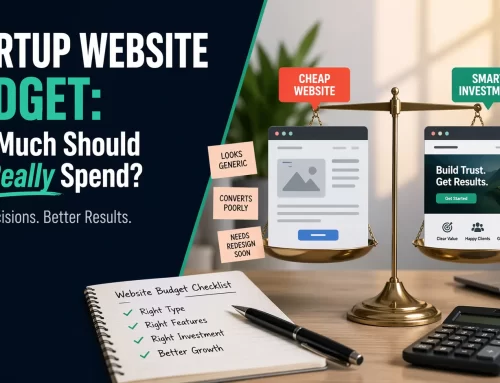
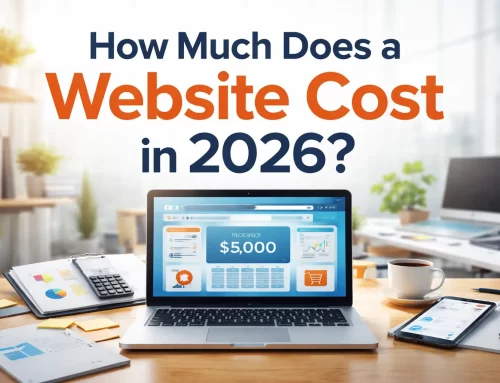
A one-page website can cost anywhere from $300 to $5,000 or more depending on who builds it, the amount of custom work involved, and whether you need branding, copywriting, SEO, or extra features.
If you use a DIY website builder, you may only spend $0-$50 per month for a template and hosting.
If you hire a freelancer, a one-page website often costs between $300 and $1,500 depending on experience and quality.
A more custom one-page website with stronger design, better copywriting, mobile optimization, and SEO usually costs between $750 and $3,000 or more.
Agencies often charge between $1,500 and $5,000+ for a one-page website, especially if they include strategy, branding, content writing, custom design, and integrations.
The final price depends on what you need. A simple one-page website with basic information will cost less than a website with custom graphics, animations, booking tools, lead forms, FAQs, testimonials, and SEO work.
For many small businesses, a one-page website is one of the most affordable ways to get online quickly without spending too much upfront.